
Atlareth
'Proud Horse-Lords of the Thundermarch'
Overview
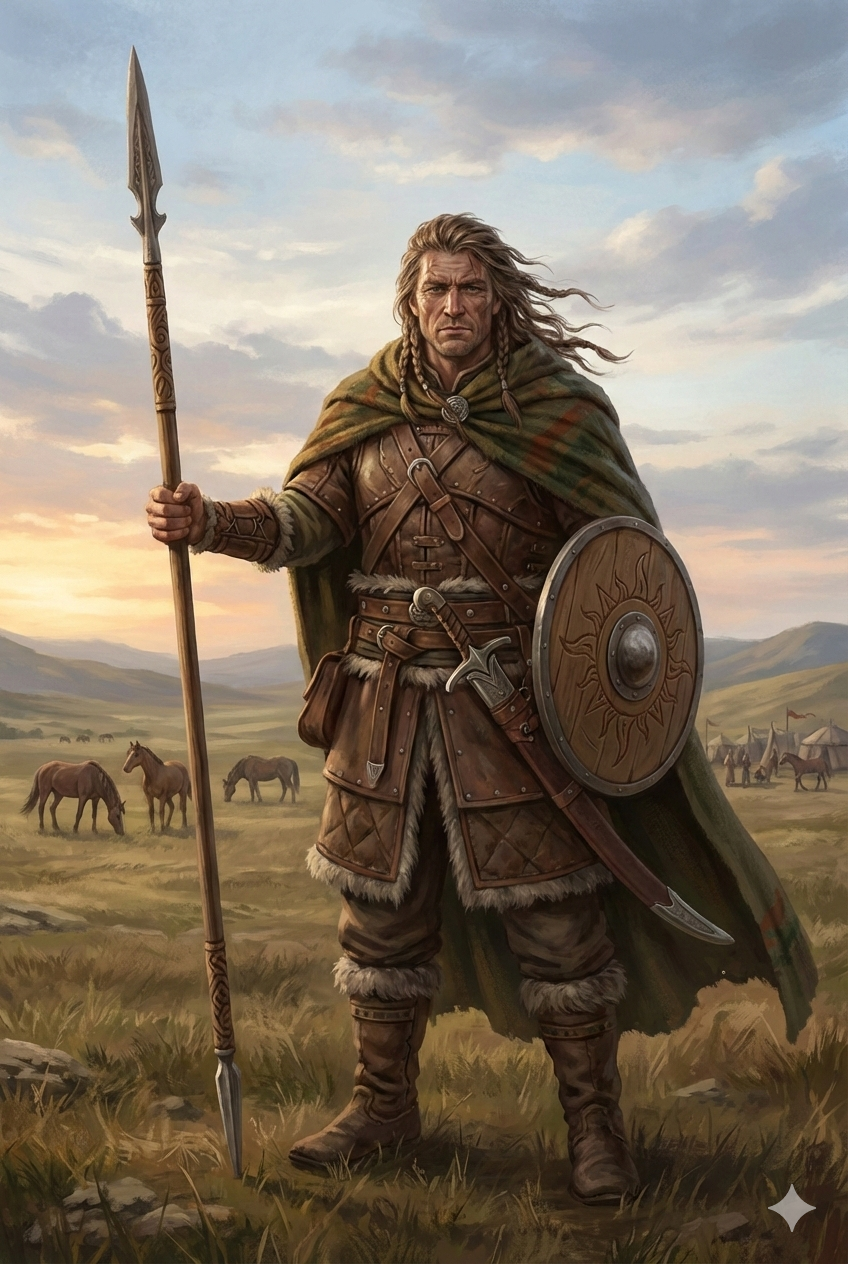
Across the vast, windswept grasslands west of Solamir lies the Kingdom of Atlar, known throughout Athera as the Thundermarch. Its people, the Atlareth, are a proud and hardy folk whose lives have long been shaped by the open plains, the changing seasons, and an enduring bond between horse and rider. From the fertile pastures and cultivated fields of Grassendeen to the rugged foothills of the Sunreach Mountains, their homeland is a country of scattered villages, timber-built halls, fortified settlements, and ancient riding roads. At its heart stands Hartholm, seat of the Atlareth kings, while beyond the settled lands stretch the wild marches where watchful riders guard against raiders, beasts, and the dangers of the untamed frontier.
The Atlareth are a people of strong traditions, bound by kinship, hospitality, and the sacred weight of a sworn oath. Their society is built around great halls and ancestral households, where Thanes command the loyalty of their people and the King rules with the counsel of the Council of Thunhalla. Though renowned for their horsemanship and formidable cavalry, the strength of Atlar rests equally upon its farmers, herders, craftsmen, and traders, whose labour sustains the kingdom through harsh winters and troubled times. Within their halls, skalds preserve the deeds of generations through song and verse, while feasts, riding contests, and seasonal gatherings strengthen the bonds between families and clans. To the Atlareth, honour is not merely inherited through noble blood or earned upon the battlefield, but demonstrated through courage, generosity, loyalty, and the keeping of one's word.
Warfare has long been woven into the history of the Thundermarch, for its open borders demand constant vigilance. The King's Eorlings patrol the distant reaches of the realm, while the Huscarls of the Thanes stand ready to defend their halls and households. When danger threatens the kingdom, the royal muster calls the free folk to arms, gathering riders and warriors beneath the storm-blue banners of Atlar. Yet the Atlareth do not measure greatness through conquest alone. Their principal devotion is to Kyte, Eternal of Protection, Justice, and Battle, whose virtues are reflected in their reverence for duty and the defence of kin and homeland. Among his most distinguished servants are the Valkyries, an order of Atlareth warrior-priestesses who wield both steel and divine power. Fiercely independent and protective of their traditions, the Atlareth maintain a longstanding but occasionally strained relationship with neighbouring Solamir. Trade and mutual interests have fostered generations of cooperation between the two kingdoms, yet differences in custom, pride, and political ambition frequently test their friendship. Though willing allies when common dangers threaten, the Atlareth bow to no foreign crown.
Ethnonyms & Language
- Kingdom/Homeland: Atlar (The Thundermarch)
- Singular Noun: Atlareth
- Plural Noun: Atlareth
- Proper Adjective: Atlareth
- Spoken Language: Atlish
- Written Script: Skeldrun-Marks
Appearance
- Skin: Typically fair to sun-weathered, often ruddy or browned from life beneath the open sky. Harsh winters may leave some Atlareth with pale, wind-bitten complexions.
- Hair: Commonly blond, flaxen, or light brown, though darker brown and reddish shades also occur. Hair is frequently worn long or braided, with leather ties, bone ornaments, or metal rings used to keep it secured.
- Eyes: Blue, grey, hazel, and green are the most common shades, though brown eyes are also found among the Atlareth. Deep blue eyes are traditionally regarded as a sign of strong spirit.
- Build: Generally sturdy and well-proportioned, with broad shoulders and strong limbs common among those accustomed to riding, farming, and physical labour.
Age
- Maturity: ~17 years
- Average Lifespan: ~70 years
Height
- Range: 65–75 inches (5'5"–6'3")
Attributes
- Strength Bonus
- Constitution Bonus
Bonus Skills
Ride
RPP Cost
1
Society & Culture
Atlareth society is founded upon kinship, personal loyalty, hospitality, and the obligations of a sworn oath. Throughout the Thundermarch, families and households form the foundation of everyday life, gathering around timber-built halls, farming settlements, and fortified communities that have endured for generations. Although their reputation abroad is largely built upon their formidable cavalry, most Atlareth lead settled lives as farmers, herders, craftsmen, traders, and labourers.
The Kingdom of Atlar is ruled by a King, traditionally regarded as the First Rider of the Thundermarch, whose authority is supported by the counsel of the Thanes gathered within the Council of Thunhalla. The realm is divided into five marches, each defended under the command of a royal Marshal. Thanes hold lands and maintain their own households, while Jarls possess land of their own and Karls comprise the free people without such holdings. Though birth and ancestry influence standing, personal reputation, service, and the keeping of one's obligations carry considerable weight in Atlareth society.
The great halls of Atlar serve as centres of hospitality, celebration, judgement, and communal life. Travellers who approach peacefully may expect food, warmth, and shelter, for the mistreatment of a guest is considered a serious dishonour. In return, guests are expected to respect their hosts, refrain from violence beneath their roofs, and observe the customs of the household. Feasts frequently bring together neighbours, relatives, warriors, and visitors, accompanied by music, storytelling, contests, and generous quantities of ale and mead.
Among the most respected figures within these gatherings are the skalds, poets and storytellers entrusted with preserving the histories of families, battles, and ancestral deeds. Through their songs and recitations, the achievements and failures of past generations remain alive in the memories of the people. A skilled skald may command the attention of a Thane as readily as a renowned warrior, particularly when matters of honour, inheritance, or ancient obligation are disputed.
Horses occupy an exceptional place in Atlareth culture. They are companions, valuable possessions, and symbols of the enduring relationship between the people and their homeland. Horse breeding is a respected profession, with bloodlines carefully maintained across generations. Riding is taught widely, and many of the kingdom's seasonal celebrations feature races, mounted contests, and demonstrations of skill. To mistreat a horse without cause is widely condemned, while the bond between a rider and a trusted mount is celebrated in countless songs and legends.
The Atlareth possess a strong martial tradition, although professional military service is distinct from social standing. The Eorlings are elite cavalry sworn directly to the Crown, while Huscarls serve as permanent household warriors maintained by individual Thanes. In times of war, the Fyrd is summoned from among the free people, bringing together those required to defend their homes and kingdom. Women may follow the warrior's path alongside men, with accomplished female fighters often recognized as Shield-Maidens.
Seasonal gatherings remain central to Atlareth life. The arrival of spring brings celebrations of new grass and foaling, while summer is marked by riding contests, trade, and gatherings between households. Harvest festivities honour the labour that sustains the kingdom, and the colder months draw families into their halls for feasting, remembrance, and the retelling of ancestral stories.
Despite their generosity toward guests, the Atlareth are not without their faults. Pride runs deeply through their society, and disputes concerning land, livestock, insults, or broken promises may develop into enduring rivalries. Their direct manner and fierce independence can make them appear stubborn or confrontational to outsiders, particularly the more ceremonious Solamirians. Although trade and mutual interests sustain relations between Atlar and Solamir, the two kingdoms are not bound by unconditional allegiance, and tensions between their people are far from unknown.
Religion
The Atlareth acknowledge the Eternals of the wider pantheon, but their principal devotion is given to Kyte, Eternal of Protection, Justice, and Battle. His teachings resonate strongly with their traditions of courage, loyalty, honour, and the defence of family and homeland. Among the Atlareth, a sworn oath is regarded as a solemn obligation, and those who betray their word may suffer disgrace extending far beyond the immediate consequences of their actions.
Worship of Kyte is woven into both public and private life. His blessings may be sought before journeys, battles, important judgements, and the swearing of oaths. Shrines and places of worship are found throughout the kingdom, while sacred cairns, memorial stones, and ancestral sites provide places for reflection and remembrance. The Atlareth generally favour expressions of faith grounded in duty and action, believing that devotion must be demonstrated through conduct as well as prayer.
The most distinctive religious institution of Atlar is the order of the Valkyries, warrior-priestesses of Kyte drawn exclusively from Atlareth women. Trained in both martial combat and divine magic, they serve their Eternal through the protection of others, the defence of sacred obligations, and the upholding of his teachings. Though their religious hierarchy and traditions are distinct from those of Kyte's clergy in Solamir, their divine powers arise from the same Eternal. Ordinary priests also serve the faithful throughout Atlar, tending shrines, conducting ceremonies, and providing spiritual guidance.
Faerion, Eternal of Nature and Beasts, is also held in particular esteem, especially among herders, hunters, and those whose livelihoods depend upon the animals and natural resources of the Thundermarch. Blessings for horses, livestock, and the changing seasons commonly reflect this reverence, though Faerion does not occupy the same central position in Atlareth religious life as Kyte.
While these traditions shape the kingdom's religious identity, individual Atlareth remain free to devote themselves to other Eternals according to their personal beliefs and circumstances.
Roleplaying
Playing an Atlareth means portraying someone shaped by a society that places exceptional value upon personal honour, loyalty, hospitality, and the keeping of one's word. Although many Atlareth take pride in their people's martial reputation, their identity extends well beyond the battlefield. Farmers, herders, craftsmen, skalds, traders, and travellers are as much a part of the Thundermarch as its celebrated horsemen.
An Atlareth character may be outspoken, proud, generous, stubborn, fiercely independent, or deeply devoted to their family and household. They are generally accustomed to direct speech and may have little patience for elaborate political manoeuvring or excessive ceremony. Yet they are not necessarily hostile to strangers; hospitality is an important virtue, and a peaceful traveller who respects the customs of a hall may find a warm welcome.
Oaths and promises should carry particular significance in Atlareth roleplay. A character who gives their word is expected to honour it, even when doing so becomes difficult. Breaking an oath may damage relationships, reputation, and social standing, while keeping a difficult promise can earn lasting respect. This does not mean every Atlareth is honourable, but even dishonest or dishonourable individuals must contend with a society that places great weight upon such behaviour.
The Atlareth's relationship with horses provides another important cultural element. A mount may be regarded as a trusted companion rather than simply a means of transportation, while knowledge of riding, breeding, and animal care is widely respected. Characters raised in settled communities may be equally familiar with farming, household crafts, and the responsibilities of maintaining a prosperous stead.
Relations with Solamirians offer opportunities for both friendship and rivalry. The kingdoms enjoy substantial trade and have cooperated against common dangers, but differences in custom and political outlook can lead to suspicion, resentment, and occasional hostility. An Atlareth might admire Solamirian craftsmanship and wealth while resenting the perceived arrogance of its nobility, or maintain close friendships with Solamirian travellers despite the prejudices of their own household.
Above all, Atlareth characters should be individuals rather than stereotypes. Not every Atlareth is a fearless warrior, accomplished rider, or devout follower of Kyte. Some may be timid, scholarly, ambitious, irreverent, or uninterested in martial pursuits. What unites them is the cultural influence of the Thundermarch: its halls, traditions, open landscapes, ancestral memories, and enduring belief that a person's deeds ultimately speak louder than their claims.